Click the ‘+’ icon to expand the menu
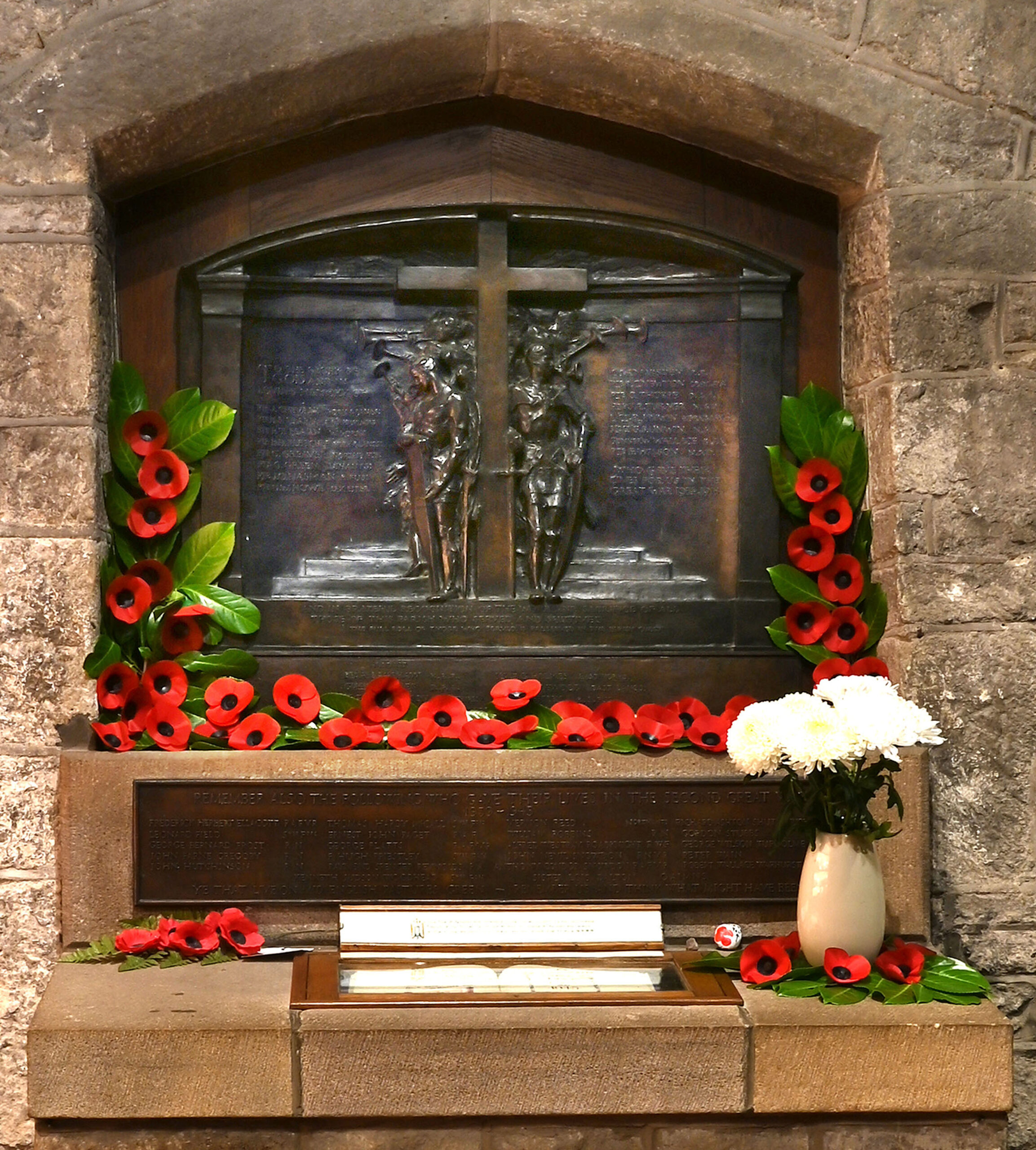
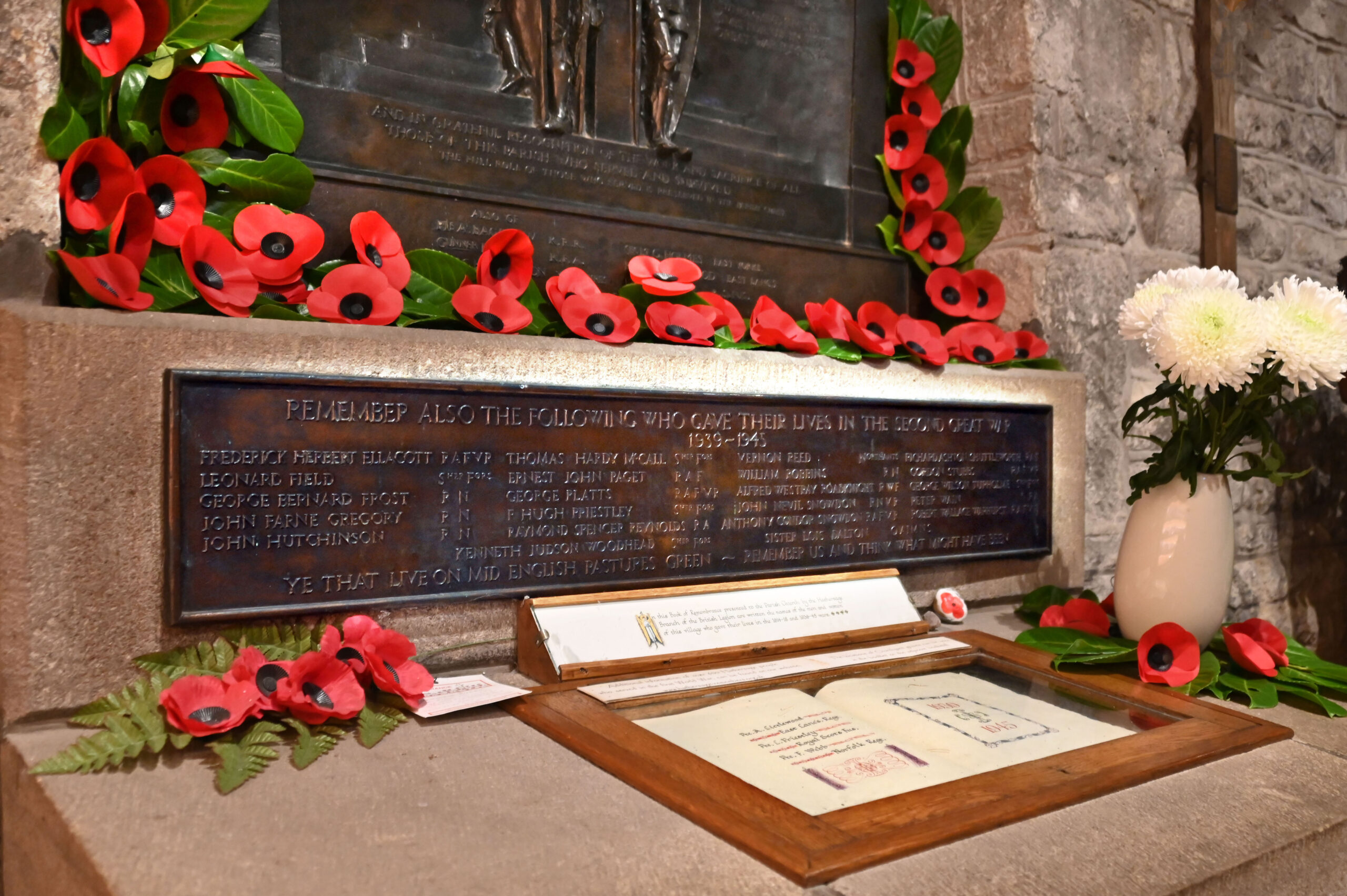
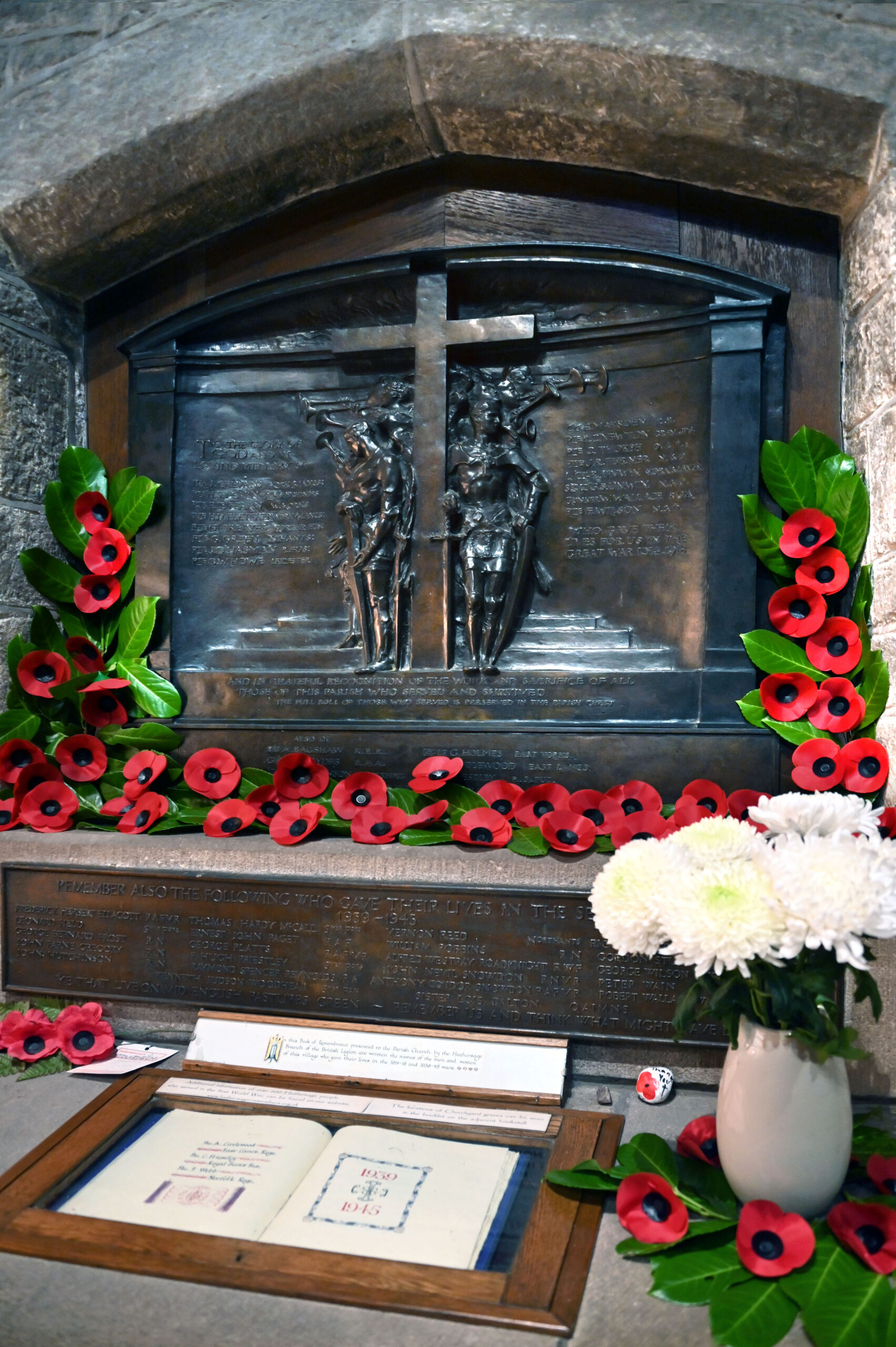
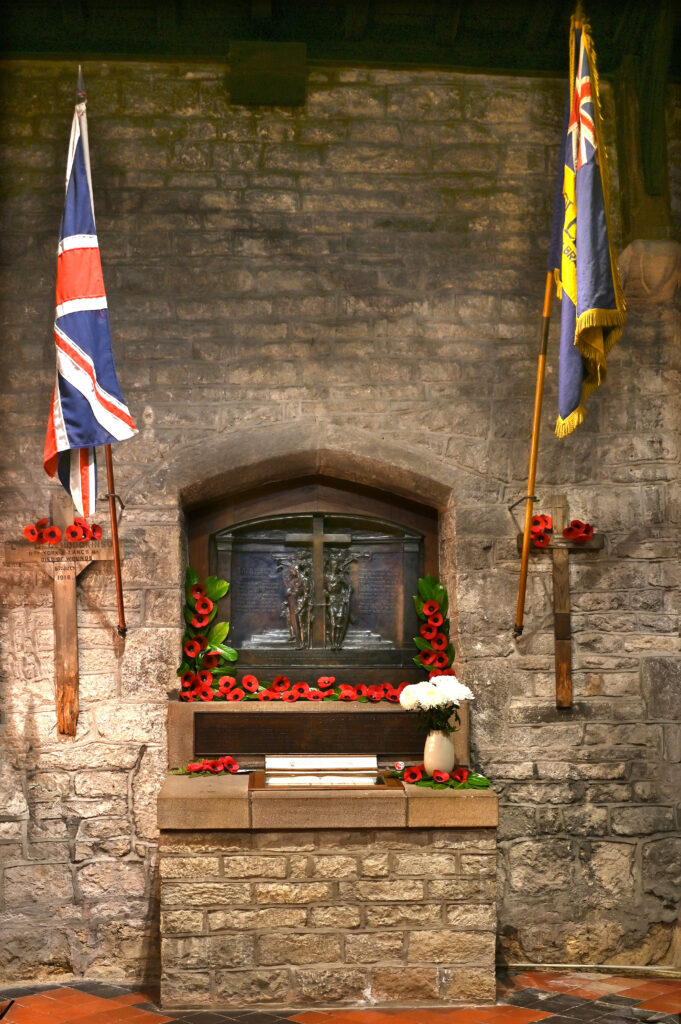
As you walk along the North Aisle, you will come to the church’s War Memorial, a striking bronze panel set into the wall. It commemorates the men from Hathersage who lost their lives in the First and Second World Wars. It is one of the most moving places in the church, a quiet reminder of the sacrifices made by local families during the greatest conflicts of the twentieth century.
The bronze memorial carries the names of those who served and never returned. Beneath it stands a stone plinth that holds the parish Book of Remembrance, where each name is recorded individually. Many visitors pause here to reflect, pray or simply acknowledge the lives represented on these pages.
On either side of the memorial there are two original wooden grave crosses from the First World War. These simple markers once stood in cemeteries in France and Belgium before the permanent stone headstones were installed by the Commonwealth War Graves Commission.
One of these belonged to Lieutenant Cedric Hodgkinson, who grew up at Moorseats, the historic house above the village that is often linked with Charlotte Brontë’s Jane Eyre. Cedric served with the York and Lancaster Regiment and died from his wounds in 1916 at the age of twenty. His temporary battlefield cross was brought home to Hathersage and preserved here.
Many of the men remembered here came from families whose descendants still live in the area. Some worked in the mills and workshops of the village, while others came from farms, shops and local trades. Their stories are recorded in booklets published by the local branch of the Royal British Legion, which are available on the church bookstall.
This part of the church has become a natural place for reflection. The soft light from the nearby aisle windows, the presence of the ancient stone and the simple dignity of the memorial create a gentle and peaceful setting.
As you stand here, you are connected not only to the men who served, but also to the families who waited at home, the communities that were changed forever, and the generations who have continued to honour their memory.