Click the ‘+’ icon to expand the menu
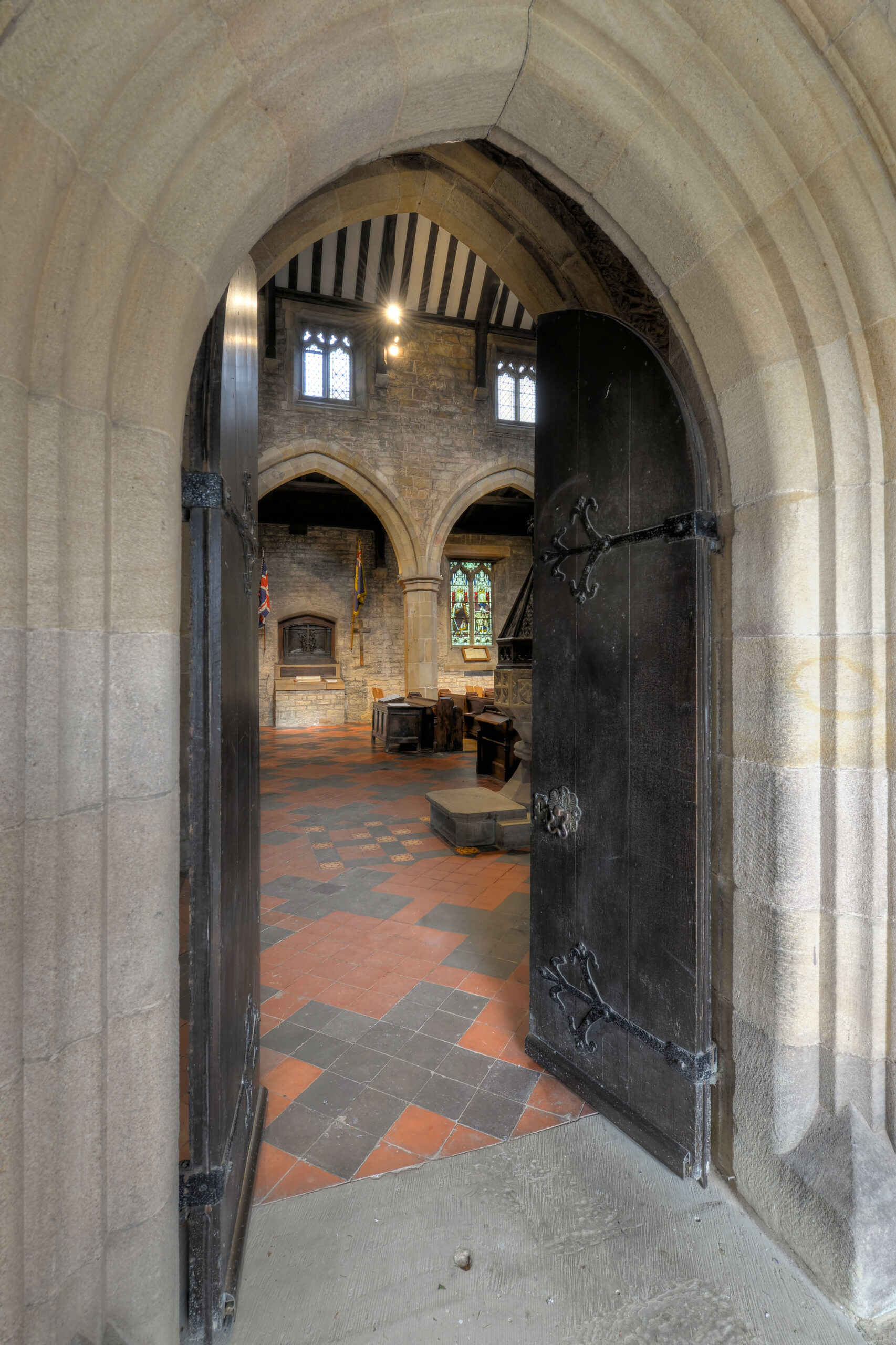
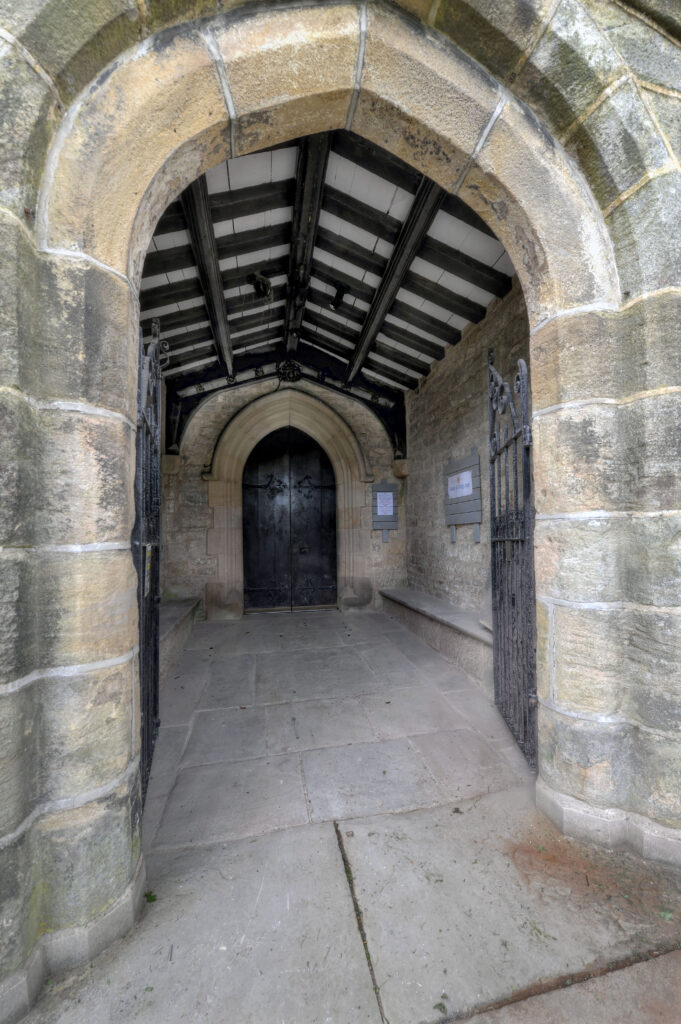
As you approach the church, you enter through the South Porch, a sheltered entrance that has welcomed villagers, travellers and worshippers for more than five hundred years. It was added around the year 1500, during the major expansion of the church led by the Eyre family.
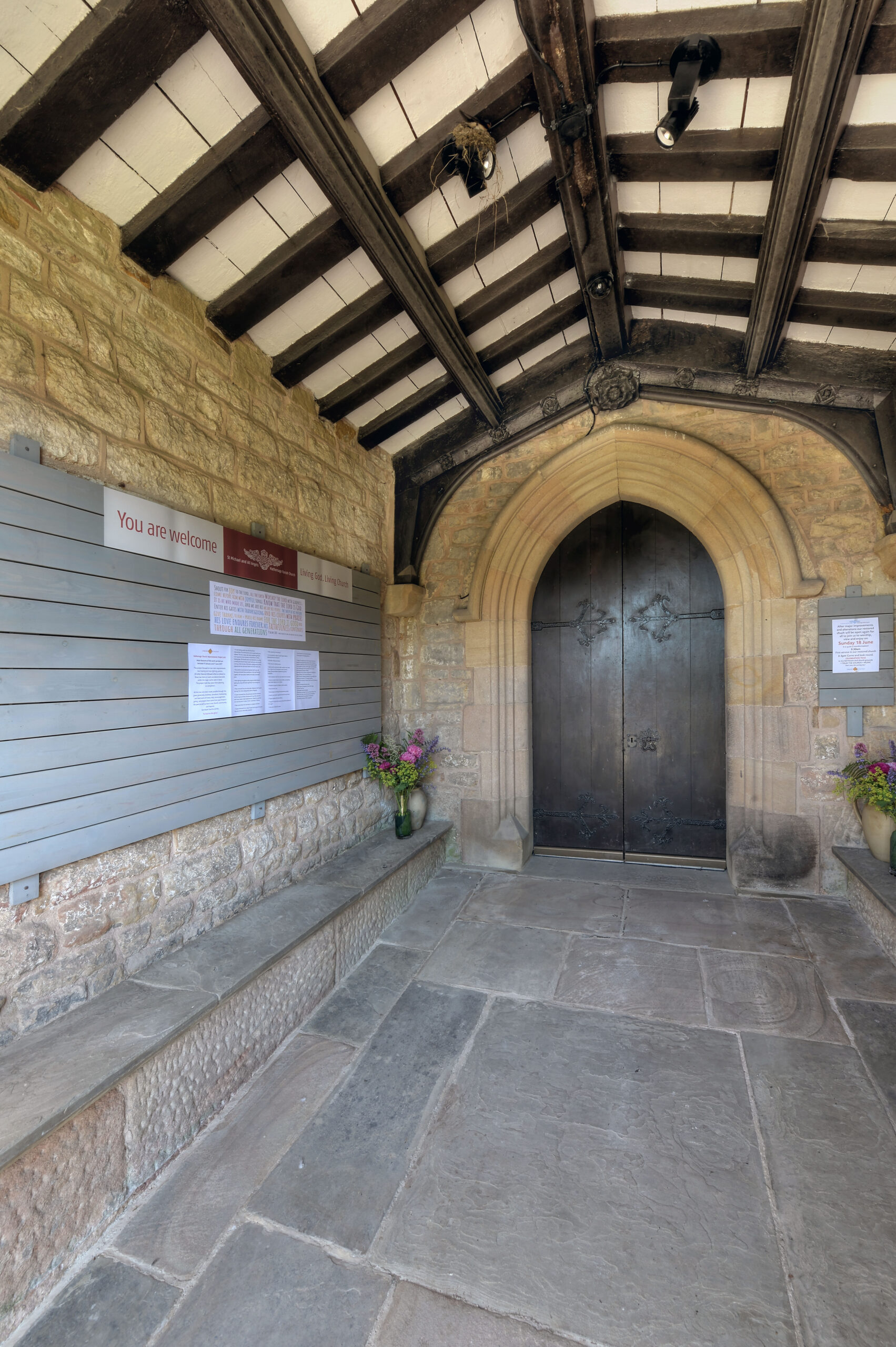
The porch was not built simply as a doorway. In medieval times it served as a place where parish business was discussed, agreements were made and local matters were settled. If you look at the stone benches on either side, you can imagine villagers sitting here in all weathers to meet, talk and settle practical concerns before entering the church.
These benches are a reminder that the church has always been at the heart of community life in Hathersage, not only for worship but also for the day to day concerns of the parish.
Before you leave the church later, remember to look up at the roof timbers inside the porch. They are decorated with boldly carved floral designs. These carved flowers echo the small florets painted in the heraldic arms of the Padley family, who were closely connected with the Eyres and with the church’s restoration in the fifteenth century.
The carvings show the skill of the medieval woodworkers who crafted this space with care and beauty, even though it was simply an entrance.
In the summer months the porch is often home to families of swallows. Their nests are tucked up among the roof timbers, and visitors who pass quietly may see young birds waiting to be fed. It is a small but lovely reminder that the churchyard is a place full of life as well as history.
The South Porch is more than an architectural feature. It is a threshold that generations have crossed for baptisms, weddings, funerals, Sunday worship and village gatherings. As you stand here, imagine the many people who have paused in this very spot over the last five centuries, from medieval farmers to Victorian mill owners to present day villagers.
It remains, as it always has been, a place of welcome.